
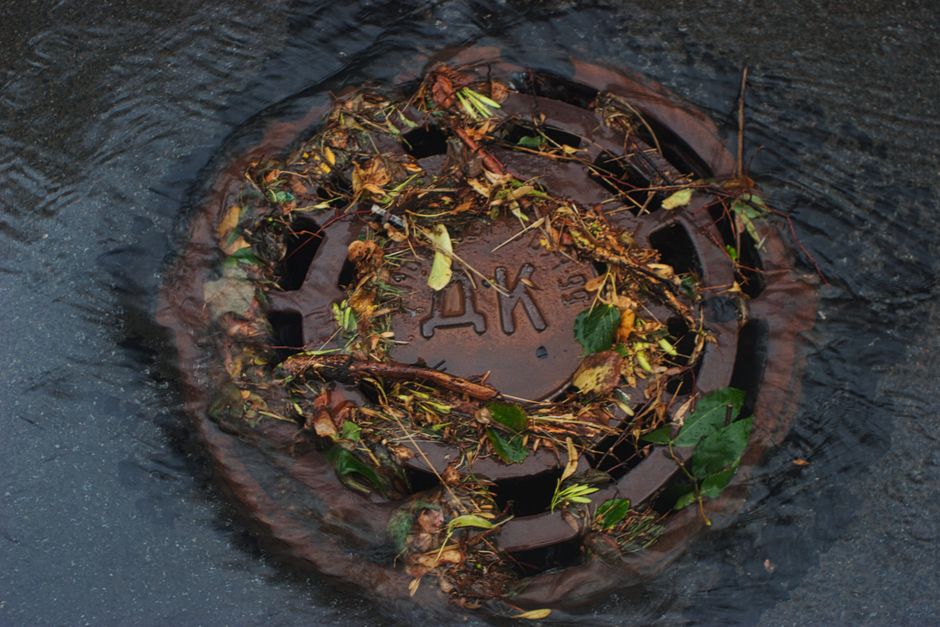
Short verdict: Homeowners with modest leaf loads and safe curb access can handle routine leaf clearing themselves; properties with guttered streets, heavy oak/pepper tree cover, or repeated backups need professional curb drain cleaning in the San Gabriel Valley to avoid property damage.
Upfront cost
DIY leaf clearing: Expect to spend $0–$150 up front for tools you likely already own or can buy cheaply. A good leaf rake or leaf blower runs $30–$150; a heavy-duty mesh bag or yard waste bins may add $20–$50. If you buy a telescoping pry bar or small drain hook for stick removal, add $15–$30.
Professional curb drain cleaning: Typical national rates for a service call to inspect and clean a curb drain range from $150 to $400. The price usually includes a visual inspection, hand removal of debris, and a water test. Jetting, camera inspection, or root cutting are extra.
Lifetime cost (5–10 year outlook)
DIY: If you clear leaves every fall and after big storms, costs remain low—under $200 over five years if you already own tools. Hidden costs include time (3–6 hours per season for a typical La Habra lot with several street trees) and the risk of missing compacted debris that leads to gradual fines and sediment entering the storm line. Repeated missed clogs can lead to downstream blockages that require professional removal costing $300–$900.
Professional cleaning: Budget $300–$1,200 over five years if you schedule annual service plus occasional jetting or camera work. Annual preventive cleanings at $200–$350 keep debris from accumulating; a single high-pressure hydro-jet and camera inspection for a stubborn or partially collapsed curb inlet can push a visit to $500–$1,200 depending on access and extent of work.
Durability and long-term outcomes
DIY clearing prevents only loose debris from entering the inlet. It does not address sediment buildup in the throat of the curb drain, compacted leaf mulch, or roots beginning to occlude the flow path. Expect DIY to delay problems for one to three years on a typical San Gabriel Valley street with deciduous oaks or pepper trees.
Professional work that includes hydro-jetting and a camera inspection removes compacted sediment and identifies structural damage. A full professional cleaning plus minor repairs can restore normal flow for five to ten years, depending on tree root growth and storm frequency. If the line is old cast-iron or clay—a common condition in older North Orange County neighborhoods—structural repairs may be required sooner.
Maintenance required
DIY maintenance routine (compact side-by-side list):
- Weekly during fall: clear visible leaves from the curb inlet and catch basin grate; 10–20 minutes per visit.
- After storms: inspect and remove compacted leaf mats; allow 30–60 minutes if wet leaves are present.
- Quarterly: run a garden hose through the opening to flush small sediment; takes 5–10 minutes and reduces odor and insects.
Professional maintenance routine: A technician performs a visual and camera inspection annually, hand-clears the inlet, and hydro-jets the throat as needed. Expect annual visits unless you have heavy tree cover; properties with large pepper trees or ficus may need service every 6 months. Technicians also document condition and will spot early signs of root intrusion or collapsed pipe that DIY checks miss.
Fit by situation — which to choose
Choose DIY clearing if: you have safe curb access, modest leaf fall (under an estimated 5–10 cubic feet of leaves per week during peak), and you can inspect after each storm. DIY fits newer neighborhoods in North Orange County with concrete inlets, limited street trees, and homeowners willing to spend 1–2 hours per week during fall. You can also follow our guidance on slow drains after heavy seasons by reading Slow Drains After a Busy Summer for when to escalate problems indoors to a pro.
Choose professional curb drain cleaning if: your property backs onto low-grade terrain where street runoff flows into yards, you have heavy canopy from oaks, pepper trees, or large eucalyptus that drop copious leaves, or you’ve seen repeated ponding at the curb during storms. Also call a pro if you notice slow drainage inside the property at the lowest fixtures (floor drains or garage drains) or visible roots near the inlet — tree roots and sewer interactions are discussed in Tree Roots and Sewer Lines. These conditions push the job toward more than a simple sweep and into camera inspections, root cutting, or pipe repair.
Signals of urgency and what to check first
Can wait a week: a few inches of standing water at the curb that recedes between storms; isolated dry leaves sitting on the grate.
Act within 24–48 hours: larger pools that encroach on the driveway, water seeping toward foundations or into landscaping, or persistent odors from the drain. These increase the risk of landscape damage and mosquito breeding.
Call a professional immediately if: water is entering the garage or basement-level living spaces, you see sewage odors inside the house, or the inlet is blocked by compacted, wet leaf mats and roots. A pro can inspect the cleanout and sewer line; for guidance on fall checks of sewer lines in La Habra see Why Fall Is the Right Time to Inspect Your Sewer Line in La Habra.
Decision rule
Choose DIY leaf clearing if you have light to moderate leaf fall, safe access to the curb, and can commit 1–3 hours per week during peak season. Choose professional curb drain cleaning in the San Gabriel Valley if you have heavy tree cover, repeated street or backyard flooding, visible roots or old cast-iron pipes, or if standing water reaches driveway or foundation lines.